

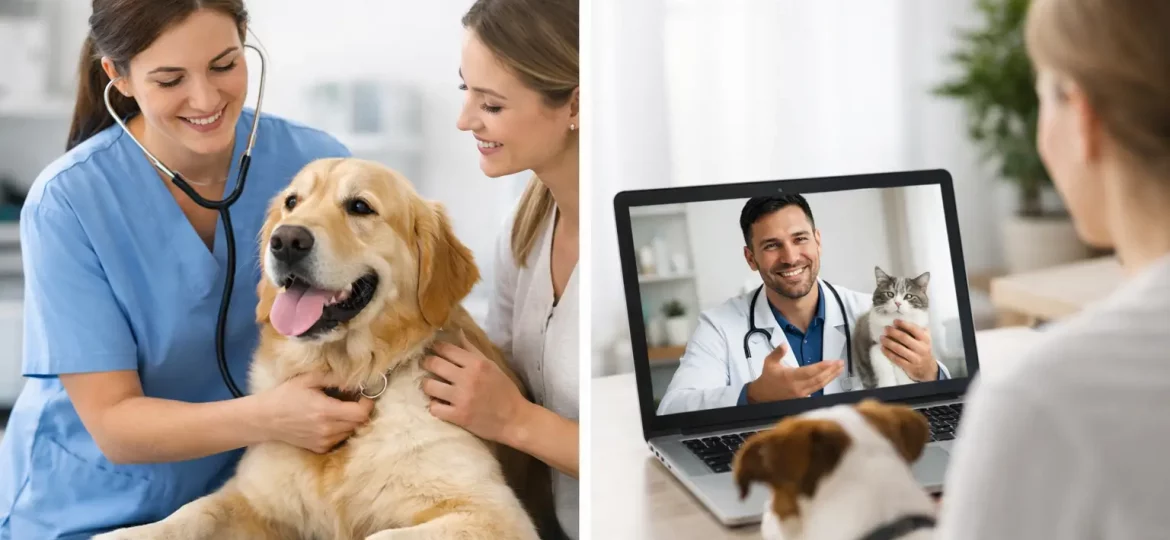
A limp that appears suddenly, an isolated bout of vomiting at midnight or a change in appetite can raise the same question: in-person consultation or veterinary teleconsultation? Choosing well is not only about saving a trip. It is about assessing the urgency, the symptoms and what information the vet needs to look after your pet quickly and safely.
Teleconsultation has broadened the possibilities of veterinary guidance, especially when you need to resolve an initial question or decide the next steps. However, it does not replace the physical examination when the professional needs to listen, palpate, take vital signs, run tests or administer a treatment. Knowing how to tell the two scenarios apart helps to avoid delays and brings peace of mind to the whole family.
In-person consultation or veterinary teleconsultation: how to decide
The first question is not which option is more convenient, but whether your dog, cat or rabbit’s condition allows waiting and being assessed remotely. A teleconsultation can be useful for describing symptoms, showing an injury by video, reviewing already prescribed guidelines or receiving guidance on home care. The vet can ask specific questions, observe the animal’s behaviour and determine whether it should come to the clinic.
The in-person consultation is necessary when a full examination is needed. There are problems that cannot be assessed well through a screen: abdominal pain, temperature, hydration status, the quality of breathing, a lump under the skin or a neurological alteration. It also makes it possible to carry out analyses, X-rays, ultrasound scans, wound care, diagnostic tests and immediate treatments.
The choice, therefore, depends on how the problem develops and not only on the symptom. A mild itch that stays stable can start with remote guidance. That same itch, if accompanied by swelling of the face, breathing difficulty or lethargy, requires urgent in-person care.
When a teleconsultation can help
Veterinary care by phone or video call is especially practical for getting a first assessment in non-urgent situations. It can help you decide whether a behaviour is to be expected, whether you should watch for certain signs or whether it is advisable to book an appointment in the coming hours.
For example, it is reasonable to consult remotely about a question on feeding, parasite prevention, settling in a new pet, care after an already reviewed procedure or the administration of a medication that has been prescribed beforehand. It can also be useful to discuss a slight change in the stool if the animal keeps its appetite, is active and shows no other worrying symptoms.
In animals that get very stressed by transport, such as some cats and rabbits, teleconsultation can avoid unnecessary trips. Even so, emotional wellbeing should not delay a check-up the vet considers necessary. In those cases, the clinic can recommend measures to reduce stress during the journey and the visit.
To make the most of the consultation, prepare specific information: how long the problem has been happening, whether it has changed, what the pet eats, what medication it receives and whether it may have had access to plants, food, objects or unusual substances. A short video can help to show a cough, a limp or an episode of trembling. Do not edit the footage or force the animal to repeat the behaviour.
Situations that require an in-person consultation
There are signs that justify going to a veterinary clinic without waiting for a teleconsultation. Speed can make a significant difference to how an illness or accident develops.
Seek urgent care if you observe difficulty breathing, fainting, seizures, heavy bleeding, a very swollen abdomen, inability to urinate, suspected poisoning or the ingestion of a foreign body. Also if your pet has suffered a road accident, a fall, a fight or any trauma, even if it seems fine at first.
In dogs and cats, repeated vomiting or diarrhoea, intense apathy, total refusal of food or water, evident pain and sudden changes in behaviour deserve an in-person assessment. In cats, not urinating or making frequent attempts without success is an emergency. In rabbits, stopping eating or producing very few droppings can worsen quickly and should be consulted as soon as possible.
Deep wounds, burns, allergic reactions with visible inflammation and eye disorders also require examination. The eye is especially delicate: a persistent closing of the eyelid, heavy discharge, intense redness or a change of colour should not be treated with human eye drops or home remedies.
What a screen cannot replace
During a video call, the vet can observe much more than it seems: the breathing pattern, the posture, the level of activity, the appearance of a wound or the way of walking. But there are clear clinical limits. The camera does not allow the fever to be measured reliably, the heart and lungs to be listened to, a joint to be palpated or the real degree of pain to be checked.
In addition, the image can be misleading. A gum may look paler or redder because of the light; a skin lesion may look smaller than it is; and a cat may appear calm in a short video even though it has been hiding for hours. That is why teleconsultation works better as a tool for guidance and follow-up, not as a definitive diagnosis for any problem.
It is also worth remembering that the professional may recommend an in-person visit after the call. This does not mean the teleconsultation was useless. On the contrary, it has served to organise the information, identify warning signs and prioritise the appropriate care.
How to act without wasting time
Faced with a new symptom, observe your pet calmly for a few minutes and avoid medicating it on your own. Many medicines for human use can be toxic for dogs, cats and rabbits, even in small doses. Nor should you try to induce vomiting if you suspect poisoning, unless a vet expressly tells you to.
If the animal is stable, note the time it started and the changes you have seen. Check whether it eats, drinks, urinates, defecates, moves normally and responds as it usually does. This information is more useful than a general description such as “it’s acting strange”.
If there is an emergency, call a veterinary clinic and follow their instructions while you travel. Transport the animal safely: in a carrier in the case of cats and rabbits, or with the help of another person if it is a large dog in pain or with reduced mobility. A frightened animal can react unpredictably, even with its family.
Prevention also reduces difficult decisions
Having regular check-ups and knowing your pet’s usual behaviour makes it easier to detect changes in time. Keeping the veterinary history, the current medication, known allergies and the contact details of an emergency clinic to hand avoids hurried searches when you are most worried.
Financial planning also influences how quickly decisions are made. Veterinary insurance can help to face expenses arising from accidents or illnesses and allow the main criterion to be the care the animal needs. With offerings such as Petplan’s, which let you go to the vet of your choice and then manage the reimbursement request, the freedom to choose your clinic is maintained when a problem arises.
Not every complaint requires rushing to the clinic, and not all of them can be resolved from a phone. The best decision is the one that combines observation, professional guidance and caution: if you have doubts about the seriousness of a symptom, consult as soon as possible. For your pet, receiving appropriate care at the right moment will always be the most reassuring answer.
