

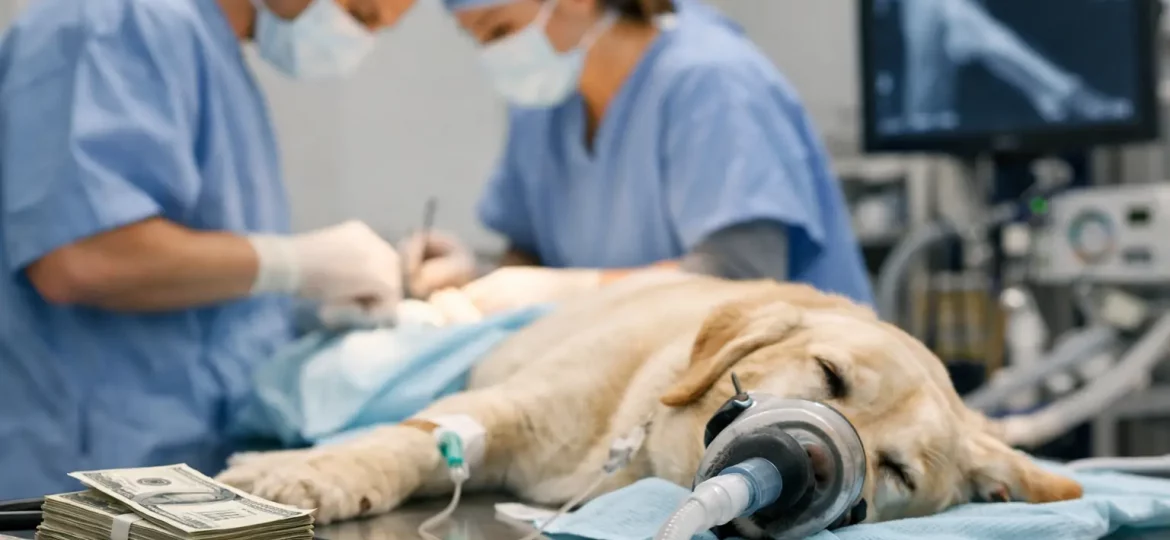
A limp that does not improve, an X-ray and a recommendation to operate can change a family’s daily life in a few hours. In this real case of reimbursed dog surgery, we see how a necessary procedure was faced with the freedom to go to the usual clinic and with a significant part of the expense recovered afterwards.
The story shows an essential point: veterinary insurance does not decide for the vet or replace their clinical judgement. Its role is to help ensure that the cost of a covered illness or accident does not force the postponement of the care the animal needs. The final amount reimbursed always depends on the conditions taken out, the policy limits and the documentation submitted.
Real case of reimbursed dog surgery: Lola’s operation
Lola, a six-year-old mixed-breed dog, started to avoid putting weight on a hind leg after a walk. At first it seemed a mild discomfort, but two days later the limp was more evident. Her family made an appointment with the vet who had known her since she was a puppy, without having to look for an approved centre or change professional.
After the examination, the imaging tests confirmed a cruciate ligament injury. The recommendation was an operation to stabilise the knee, followed by a period of rest and rehabilitation. It was a decision that required acting quickly, but also weighing up a high estimate: orthopaedic consultation, X-rays, pre-operative blood test, surgery, anaesthesia, medication and check-ups.
The initial estimate was €1,487.60. The family was able to focus on preparing Lola for the operation and following the clinic’s instructions. They paid the invoice directly to the vet and, once the procedure had been carried out, submitted the reimbursement request online with the itemised invoice and the clinical report.
The surgery progressed well. During the first few weeks, Lola needed very short walks on the lead, controlled activity at home and check-ups to monitor how the joint was healing. The recovery was not instant, but the veterinary follow-up made it possible to adjust the guidelines until she put weight on the leg again with confidence.
The amount recovered in this case
Lola’s policy provided a reimbursement percentage of 80% for covered veterinary expenses, within its annual limit and after applying the conditions in force. The injury occurred after the applicable waiting period and was not recorded as a pre-existing condition. Therefore, on the accepted expenses of the procedure, the reimbursement was €1,190.08.
The family took on €297.52 of that expense, in addition to any item not covered that might appear on the invoice. The difference is significant: it does not eliminate the cost completely, but it reduces the financial impact of a medical decision that was not advisable to delay.
This example does not establish a guaranteed result for all cases. Two similar surgeries can have different amounts depending on the technique used, the city, the complexity of the injury, the clinic chosen and the hospitalisation needs. The reimbursement also changes if the policy has a different percentage, a different annual limit or exclusions that affect the diagnosis.
What made the reimbursement possible
In veterinary surgery, the administrative process is usually simple when the clinical information is complete. In Lola’s case, three elements were especially relevant: having an active policy before the injury, having clear documents and submitting the request once the care had been paid for.
The itemised invoice made it possible to identify the veterinary procedures carried out: tests, anaesthesia, surgical procedure, medication and consultations. The vet’s report explained the diagnosis, the reason for the operation and the treatment indicated. These documents help to assess whether the expense is related to cover included in the policy.
It was also important that the family kept all the documents from the first consultation. Sometimes the surgery is the most visible expense, but the process starts earlier: an examination, tests to confirm the diagnosis and, in certain cases, a second opinion. Keeping the documentation from the outset avoids having to request it again when the claim is submitted.
With a reimbursement veterinary policy such as Petplan’s, the owner can go to the vet they consider appropriate, pay for the treatment and manage the invoice and the report digitally. It is a valuable alternative when a relationship of trust with a clinic already exists or when the animal requires a specific specialist.
Why not all surgeries are reimbursed the same
Looking for a real case of reimbursed dog surgery is a good way to understand how the insurance works, but it should not replace reading the conditions of your own policy. The cover depends on when the insurance was taken out, which guarantee was chosen and what happened before the symptoms appeared.
Pre-existing illnesses or injuries are one of the most relevant factors. If the dog already showed symptoms, had received a diagnosis or was following a treatment before taking out the policy, that problem may not be covered. A treatment carried out during the waiting period corresponding to the guarantee taken out is not usually covered either.
The annual limit also determines the maximum amount recoverable. For example, even if a surgery is included, it cannot be reimbursed above the capital available in the year. In policies with cover of up to 100% and an annual limit of up to €3,100, it is worth reviewing the level selected and how much capital has already been used in other consultations or treatments.
In addition, not every item on an invoice necessarily has the same treatment. Purely preventive expenses, certain non-medical care or expressly excluded services may be left out. If there are doubts before a scheduled operation, it is reasonable to review the contractual documentation and check what information will be needed to process the expense afterwards.
How to prepare if your dog needs an operation
In an emergency, the priority is that the dog receives veterinary care. If the surgery can be planned, having an order helps you make decisions with less pressure. Ask the clinic for an indicative estimate and ask what tests, medication, check-ups or rehabilitation might be added to the initial cost. It is not necessary to demand a fixed figure when there is still clinical uncertainty, but it is worth understanding the possible scenarios.
Before the procedure, review your policy: reimbursement percentage, annual limit, waiting periods, possible excesses if there are any and exclusions. It is not about turning a delicate moment into a formality, but about knowing what expectations are realistic. A clear conversation avoids later surprises.
After the surgery, request a complete invoice and the veterinary report. Check that they include the identification of the clinic, the date, the diagnosis or reason for the consultation, the treatments carried out and the amounts. Also keep the proof of payment. If subsequent check-ups take place, keep their documents separately so that you can submit them correctly.
The recovery deserves as much attention as the operation. Following the rest, administering the prescribed medication and attending the check-ups directly influence the dog’s wellbeing. In orthopaedic injuries, trying to speed up the walks or allowing jumps too soon can compromise the clinical result and prolong the process.
Peace of mind to decide with its health in mind
When a dog needs surgery, no one wants the worry about the bill to weigh more than the diagnosis. Insurance does not prevent injuries or illnesses from happening, but it can give room to choose veterinary care with greater peace of mind and to face unexpected expenses with financial support.
Lola’s case is a reminder that foresight works better before the problem appears. Reviewing the cover when the dog is healthy allows you to make decisions calmly and to save your energy, if an operation comes, for what really matters: being there for it during its recovery.
What does it cost? See what cruciate ligament surgery and a hospital stay cost in Spain.
