

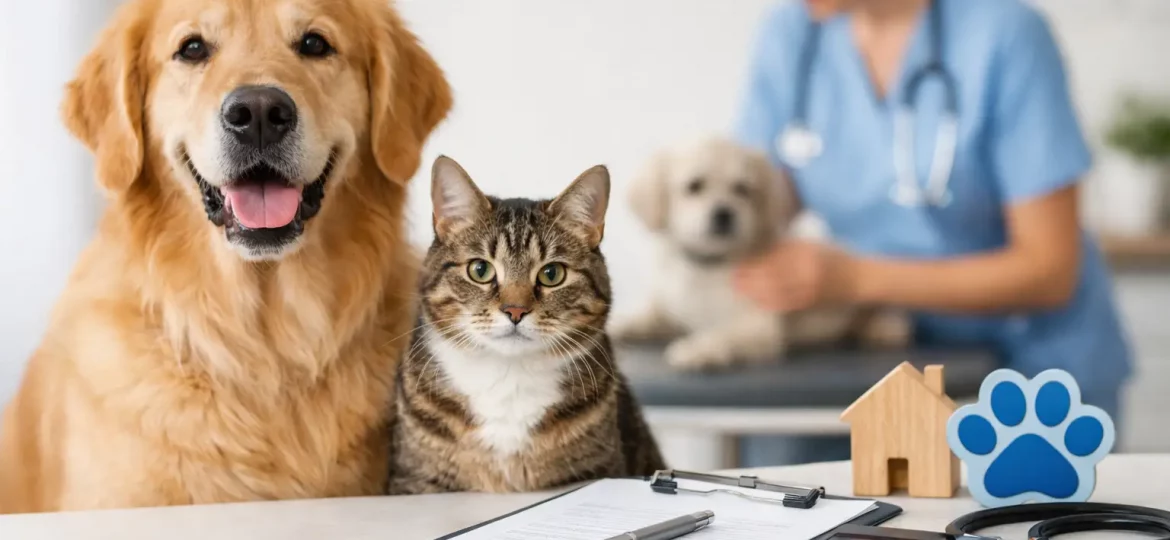
A useful opinion on pet health insurance is not based only on how much the monthly premium costs. It is tested when your dog starts limping, your cat needs diagnostic tests, or your rabbit stops eating and you have to get to the vet without delay. At moments like those, having well-chosen protection can let you make decisions with your animal’s care in mind first, rather than the immediate impact of the bill.
Pet insurance does not stop an animal falling ill or having an accident. Its job is to help you meet covered veterinary costs, within the limits and conditions of the policy. So before comparing prices, it is worth understanding how each proposition works and which part of the financial risk will still sit with you.
Judging pet health insurance: what to weigh up
The experience of holding a policy depends a great deal on each animal’s needs and on the conditions you have agreed. It does not mean the same thing for a young, active dog as for an indoor cat or a rabbit, even though all of them can need unexpected attention. Age, breed, clinical history, lifestyle and your own ability to absorb a large unforeseen expense all change the decision.
The first question should not be “which is cheapest?” but “which costs could I absorb if my pet needed treatment tomorrow?”. An emergency, a hospital stay, surgery or a specialist test can push a bill up quickly. If you would rather have backing for those scenarios, insurance can be a sensible decision.
How much you value freedom of choice matters too. Some people want to keep going to the clinic they trust, especially when the vet already knows their animal. With reimbursement policies, the process usually means taking your pet to the practice you choose, paying for the consultation or treatment, and then submitting the invoice together with the veterinary report to claim the corresponding refund.
Reimbursement changes how you use the policy
The reimbursement model offers flexibility, but it requires you to understand the timings and the admin. You need to be able to pay at the clinic up front and keep hold of the necessary paperwork. In return, you are not tied to a closed list of vets and you can choose where your pet is treated.
Before buying, check the reimbursement percentage, the annual limit and whether there is an excess. The percentage tells you what proportion of covered costs can be refunded. The annual limit sets the maximum the insurer will pay during the policy period. The excess, where it applies, is the amount the policyholder carries before receiving a refund, or which is deducted from it, depending on the conditions.
Reading “up to 100%” is not enough on its own. That maximum can depend on the plan chosen, the costs included and the limits contracted. A good comparison should be made with concrete examples: an emergency consultation, blood work, an imaging test, surgery and several days of hospitalisation. That way you can picture more clearly what protection you would actually have in a real situation.
Areas of cover worth reading closely
Medical cover is the heart of a pet health policy, but policies are not identical. Read carefully what the insurance includes in the event of accident and illness. Diagnostic tests, treatments, surgical procedures, medication, hospitalisation and rehabilitation may all carry specific conditions.
Exclusions are just as relevant. Pre-existing conditions, meaning those the animal had before the policy was taken out or before cover began, are usually not covered. It is also common for certain preventive care such as vaccinations, deworming, routine check-ups or neutering to fall outside a policy centred on illness and accident. That is not a fault in itself: it depends on the kind of protection you are looking for. What matters is knowing before you buy.
Check the waiting periods as well. These are the initial days during which certain cover cannot yet be used. This point avoids misunderstandings and is a strong reason not to wait until symptoms appear before looking for a policy.
If your pet belongs to a breed predisposed to particular problems, ask how the policy treats hereditary or congenital conditions. The answer can vary by product and clinical situation, so it is worth confirming the conditions in writing before deciding.
When does pet insurance pay off?
There is no universal answer. For some families, setting money aside each month in an account earmarked for the pet is enough. That approach can work if you have the discipline to save and enough financial headroom to face several thousand euros in a complex emergency.
Insurance makes more sense when you want to turn part of that uncertainty into a regular, predictable expense. It can also be particularly useful if you do not want to delay tests or treatment because of the up-front cost, or if you value having remote veterinary support for questions that arise outside your clinic’s hours.
The pet’s age is another decisive factor. Taking out cover while the animal is young and healthy usually makes it easier to protect against future illness, always subject to the insurer’s assessment and conditions. Waiting until a diagnosis already exists reduces the cover available for that particular problem, since it will then be treated as pre-existing.
How to compare policies without stopping at the premium
A useful comparison means looking at the whole policy. Start with the annual limit: cover designed for small expenses is not the same as cover that can stay with you through an expensive course of treatment. Then look at the reimbursement percentage and the excess, because together they determine what you would actually receive.
Check whether you can go to any vet and how a claim is submitted. A clear digital process, with the option to send the invoice and veterinary report online, removes friction at a point when you are already worried about your animal’s health. Consider too whether 24-hour veterinary assistance is included, a resource that can offer guidance on an urgent question, although it does not replace an in-person examination when one is needed.
Finally, read the exclusions, the waiting periods and the identification and vaccination requirements. A policy that is easy to understand is a good sign. If a term is not clear, it is better to ask before buying, not when you need to use the cover.
A practical example for perspective
Imagine your dog is injured during a walk and the vet recommends X-rays, medication, a procedure and follow-up appointments. The final invoice can bring together several items and easily exceed what you had budgeted for that month. With insurance, the reimbursable amount will depend on the cover contracted, the excess, the applicable percentage and the annual limit still available.
Now picture the same case with a policy that excludes certain procedures, or with a limit that is too low. You would have some help, but perhaps not enough for the very scenario that worried you most. That is why it is better to choose cover for its ability to respond to a serious problem, not simply for its entry price.
Petplan, as a pet insurance specialist, builds its proposition on reimbursement of covered veterinary costs, the freedom to attend any clinic and digital handling of the paperwork. Across its plans, the cover communicated can reach up to 100%, with an annual limit of €3,100, always in accordance with the conditions of the policy taken out.
Choosing pet health insurance is, at heart, a decision about peace of mind and the ability to respond. Look for a policy you understand, that fits your budget and that you can use without giving up the care you want for your companion. When health demands quick action, having reviewed those details in advance can make a real difference.
