

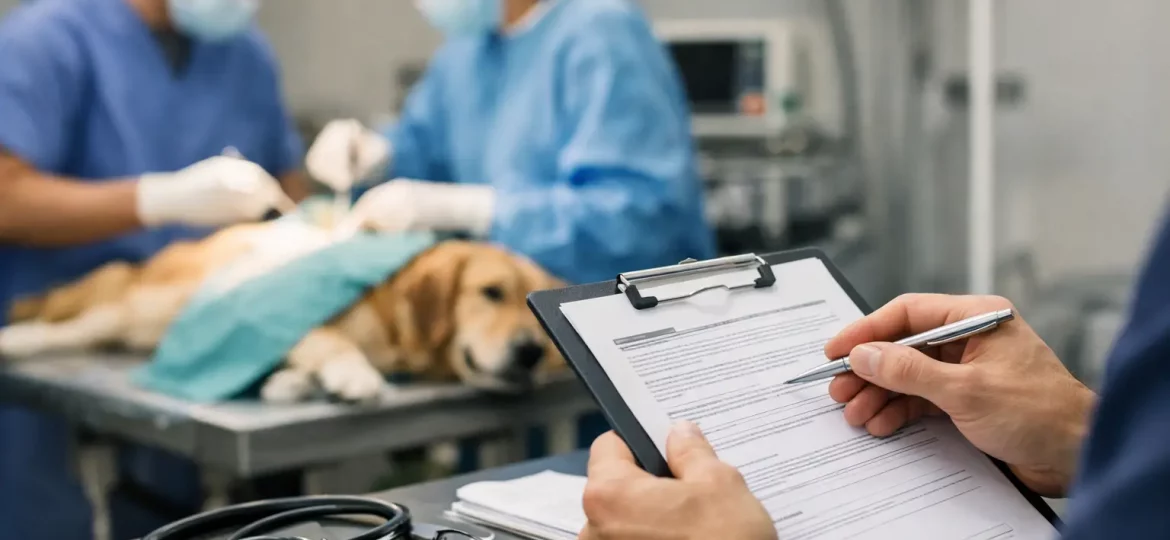
Veterinary surgery rarely arrives at a convenient moment. A limp that does not improve, an object swallowed on a walk or an unexpected diagnosis can all end up in theatre, turning worry about your pet’s health into a significant bill. Having cover for veterinary surgery helps you make clinical decisions more calmly, without cost being the only factor on the table.
But not every policy responds in the same way to an operation. The difference lies in which costs the insurance accepts, what limits it applies and which conditions have to be met before you can claim. Understanding that before you need it means protecting your dog, cat or rabbit better.
What veterinary surgery cover is
Surgical cover is the part of a pet insurance policy intended to meet, wholly or partly according to the conditions contracted, the costs of an operation made necessary by accident or illness. It can range from emergency surgery for a fracture to abdominal surgery, the removal of a tumour or a procedure to treat a specific condition.
It is not only about the operation itself. Surgery is usually the central point of a process that begins with a consultation and diagnostic tests, continues with anaesthetic, medication and hospitalisation, and may require follow-up appointments. So when assessing a policy, it is worth looking at the whole set of related costs rather than stopping at the word “surgery”.
The exact cover depends on each policy and the benefits chosen. It is also affected by the origin of the problem, the date the symptoms appeared and whether the waiting periods set out in the policy have been completed.
Costs a policy may include for an operation
When surgery is covered, the insurance may take in various items linked to the veterinary treatment. The tests needed to reach the diagnosis, such as blood work, X-rays, ultrasound scans or more advanced imaging, can be decisive in determining whether an operation is the best option.
After that, the estimate usually includes the procedure, use of the operating theatre, the anaesthetic, the materials used and care during admission. In some cases it also includes medication prescribed by the vet, follow-up consultations and treatments needed during recovery, always within the policy conditions.
Think of a cat needing surgery after swallowing a thread, or a dog with a ligament injury. The cost is not limited to the operation. There are prior tests, pain management, possible nights in hospital and check-ups. Well-designed cover should help you meet that whole care pathway, not just one isolated part of it.
There are also common exclusions worth knowing about. Preventive or elective procedures, such as neutering unless the policy states otherwise, are not usually part of illness and accident cover. Pre-existing conditions are not normally covered either, meaning problems that already existed or were showing symptoms before the policy was taken out or before the waiting period ended.
How reimbursement works for veterinary surgery
Reimbursement pet insurance gives you the freedom to attend the clinic you choose. That is particularly useful if you already have a vet you trust, if you need care in an emergency, or if a specialist recommends carrying out the procedure at a particular centre.
The process is usually simple: you take your pet to the vet, pay the invoice and keep the clinical documentation. You then submit the itemised invoice together with the veterinary report through the channels the insurer provides. Once the case has been reviewed and confirmed to meet the policy conditions, the reimbursable amount is calculated.
Before a planned procedure, always ask for a detailed estimate. It will not only help you organise yourself, it will also let you identify items such as tests, anaesthetic, hospitalisation, medication and follow-up. If the situation is urgent, put your pet’s care first and request all the documentation when you can.
At Petplan, invoices and reports are handled online and cover can reach up to 100% of the covered veterinary costs, within the annual limit contracted. Reading the specific conditions remains the best way to understand the scope that applies to each policy.
What to check in veterinary surgery cover
One policy can look much like another until an operation comes along. To compare properly, review these points before buying:
- Reimbursement percentage: this tells you what proportion of covered costs you get back. A higher percentage reduces the final outlay, though the premium may differ.
- Annual limit: the maximum the insurer will pay during the policy year. It matters because complex surgery can account for a substantial share of the year’s veterinary spend.
- Excess or co-payment: some policies apply a fixed amount or a percentage carried by the owner. Check how it is calculated and whether it applies per invoice, per claim or per period.
- Waiting periods: the days that must pass from purchase before certain cover takes effect. Accidents and illness may follow different rules.
- Exclusions and pre-existing conditions: read how the policy defines a prior condition and what happens with hereditary, congenital or chronic conditions, if any.
There is no identical choice for every family. An active puppy at risk of accidents does not have the same needs as an adult cat or a rabbit that requires frequent monitoring. The best cover is the one that fits the species, age, health history and level of financial protection you are looking for.
When to take out cover for veterinary operations
The best time to buy is usually while your pet is healthy and showing no symptoms of an illness awaiting diagnosis. Waiting until a specific problem appears can limit the cover for that episode, since pre-existing conditions are normally excluded.
Insuring a young animal does not mean expecting something bad. It means having financial support in place if an accident happens or an illness is diagnosed in future. It also lets you get past the waiting periods before you need to use the policy.
If you adopt an adult pet, considering insurance can make sense too. The essential thing is to review their veterinary history openly, along with the acceptance conditions and any exclusions that may apply. Planning ahead does not remove the unexpected, but it stops it finding you with no room to decide.
A decision made to care better
When surgery is recommended, ask your vet to explain the diagnosis, the alternatives available, how urgent the treatment is and the expected recovery. With that information you can talk about costs clearly and submit a complete claim if you hold a policy.
Cover for veterinary surgery does not replace the professional’s judgement, nor does it remove the need to act quickly in an emergency. What it gives you is room: room to choose who you trust with your pet’s care, and to focus on their recovery when they need you most.
