

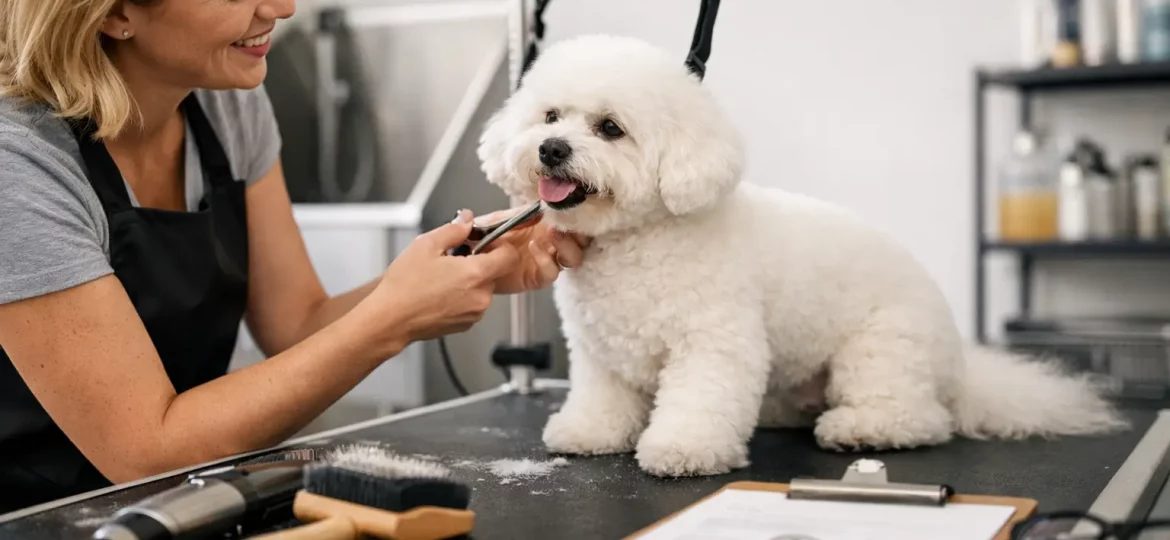
A slip during a bath, an unexpected reaction to a product or an injury while handling a nervous dog can happen even in a grooming salon that works carefully and with experience. Having insurance for a dog grooming business does not prevent these incidents, but it does help ensure that a one-off situation does not put the continuity of the business, or the trust of the families who leave their pet in your care, at risk.
Dog grooming combines customer service, animal handling, use of machinery and temporary custody. Appropriate protection therefore has to look beyond the usual damage to premises. The aim is to work with the security of having a clear response if an animal, a client or a third party claims for harm connected to your activity.
Why a grooming salon needs specific protection
Clipping, brushing, drying or bathing a dog are everyday tasks, but every pet has a different temperament, state of health and set of needs. An animal may be frightened by the noise of the dryer, move during a clip or react to contact in a sensitive area. It may also fall, escape when a door opens, or develop a skin reaction after the service.
In these circumstances, a professional’s liability does not rest on good intentions alone. There may be veterinary costs, claims for damages or disagreements about what happened. The right professional policy is designed to support the business against the risks inherent in the activity, subject to the conditions, limits and exclusions taken out.
This is not about assuming something will go wrong. It is about recognising that caring for animals carries responsibility, and that planning ahead protects both the business and the people who trust it.
Key cover in grooming salon insurance
The central guarantee is usually professional or operating liability. This cover can respond to personal injury, material damage or losses caused to third parties in the course of the activity. In a grooming salon, the third party may be the owner visiting the premises, a person injured by a dog in your custody, or the animal itself, depending on what the policy provides.
What matters is that the contract expressly includes work with animals and circumstances of temporary keeping, custody or control. Not all commercial liability policies treat this risk with the same scope. Generic cover for premises may fall short if it does not acknowledge that your business involves dogs being handled, bathed and attended to.
Harm to animals in your care
This is one of the guarantees that deserves the closest reading. During an appointment, the dog is temporarily in the professional’s charge. If it suffers an accidental injury while receiving the service, veterinary costs or a claim from the family may follow.
Check how the insurer defines harm to the animal, which situations are covered and which fall outside. Some policies may include accidents during the service but exclude pre-existing conditions, problems arising from the dog’s age, or situations linked to inadequate instructions given by the owner. Clarity here avoids misunderstandings when they matter most.
Liability for harm to third parties
Incidents can also occur that do not directly involve the dog being groomed. A client may slip on a wet area, a dog may cause harm to another person while waiting, or a cage may damage a third party’s property.
Liability cover helps meet covered claims, compensation and, usually, legal defence costs within the limits taken out. The sum insured matters: a low figure can fall short if the incident is serious. Choosing it means weighing up your volume of clients, the type of premises and the services you provide.
Legal defence and claims
A claim does not always arrive with clear evidence. There may be different accounts of the condition an animal arrived in, of a recommendation about a clip, or of the instructions given to the owner. Having legal defence can make advice and the handling of a covered dispute easier.
Beyond the cover, good internal practice makes the difference. An up-to-date record for each animal, informed consent for certain services and a note of any incidents all help document the work carried out. They do not replace insurance, but they strengthen prevention and allow you to act with more rigour.
Damage to premises, equipment and stock
Liability cover does not usually extend to the business’s own losses. To protect the premises, it may be necessary to add or take out a commercial combined policy covering fire, water damage, theft, glass breakage or electrical damage, among other events.
Dryers, hydraulic tables, baths, clippers and air conditioning are essential tools. If a breakdown or an incident forces you to close for several days, the impact goes beyond the repair. Some businesses therefore consider including cover for loss of profits or business interruption, particularly if they depend on a single location.
Risks that may fall outside the policy
A useful policy is not the one that promises to cover everything, but the one that explains precisely what it covers and on what terms. The exclusions matter as much as the guarantees.
It is common for intentional damage, work carried out without the required qualification, or services not declared at the point of purchase to fall outside. There may also be limits for certain breeds, animals with a history of aggression, specialist cosmetic treatments or additional services.
If, alongside grooming, you offer day care, transport, retail, walking or boarding, you must say so. Each activity increases or alters the risk. Transporting animals, for example, may require specific guarantees and will not necessarily be included in a policy designed solely for work inside the premises.
The excess is another point to review. It is the amount the business carries in certain claims before the insurer steps in. A lower premium can mean a higher excess, so it is worth weighing the balance between the annual cost and the business’s real capacity to absorb an unexpected event.
How to choose cover that fits your activity
Before comparing prices, define how you work. A sole professional working by appointment does not need the same protection as a centre with several employees, a waiting area, a collection service and a high turnover of dogs.
Review the indemnity limit per claim and per year, the territorial scope, legal defence and whether there are sub-limits for harm to animals in custody. Ask as well whether employees and collaborators are included, or whether they must be declared individually. Where staff are employed, occupational risk prevention and employer obligations require their own analysis.
Ask for the description of the activity to reflect reality. It is better to declare in detail that you carry out baths, clips, de-shedding, cosmetic treatments or temporary care than to rely on an overly broad definition. In insurance, what appears in the particular conditions carries enormous practical weight when a claim arises.
In Spain, requirements can vary by autonomous community, by municipality and according to the services the establishment offers. Checking the applicable rules and keeping licences, registrations and protocols current is part of protecting the business. Insurance accompanies that responsibility; it does not replace legal obligations or good professional practice.
Prevention protects your reputation too
Insurance works best alongside a prevention routine. Before starting, ask about allergies, skin problems, medication, mobility limitations and previous reactions to the dryer or to nail clipping. Watching the animal from the moment it comes in lets you spot signs of stress and adapt the service.
Keep products correctly labelled, check the condition of your tools and avoid leaving a dog unsupervised on a work table. If something goes wrong, tell the family honestly and quickly, always putting the animal’s wellbeing first. Trust is built on the quiet days, but it is proved when a problem appears.
Pet insurance taken out by the family and a professional policy for the salon serve different purposes. The first can help the owner with their pet’s health costs according to its cover; the second protects the liability and resources of the business. Being clear about that difference lets you guide each client better without creating mistaken expectations.
Choosing insurance for your grooming salon is a decision about professional care. When the cover genuinely reflects your services, your premises and the kind of animals you work with, you can concentrate on what matters: offering attentive, safe and respectful treatment to every dog that passes through your hands.
