


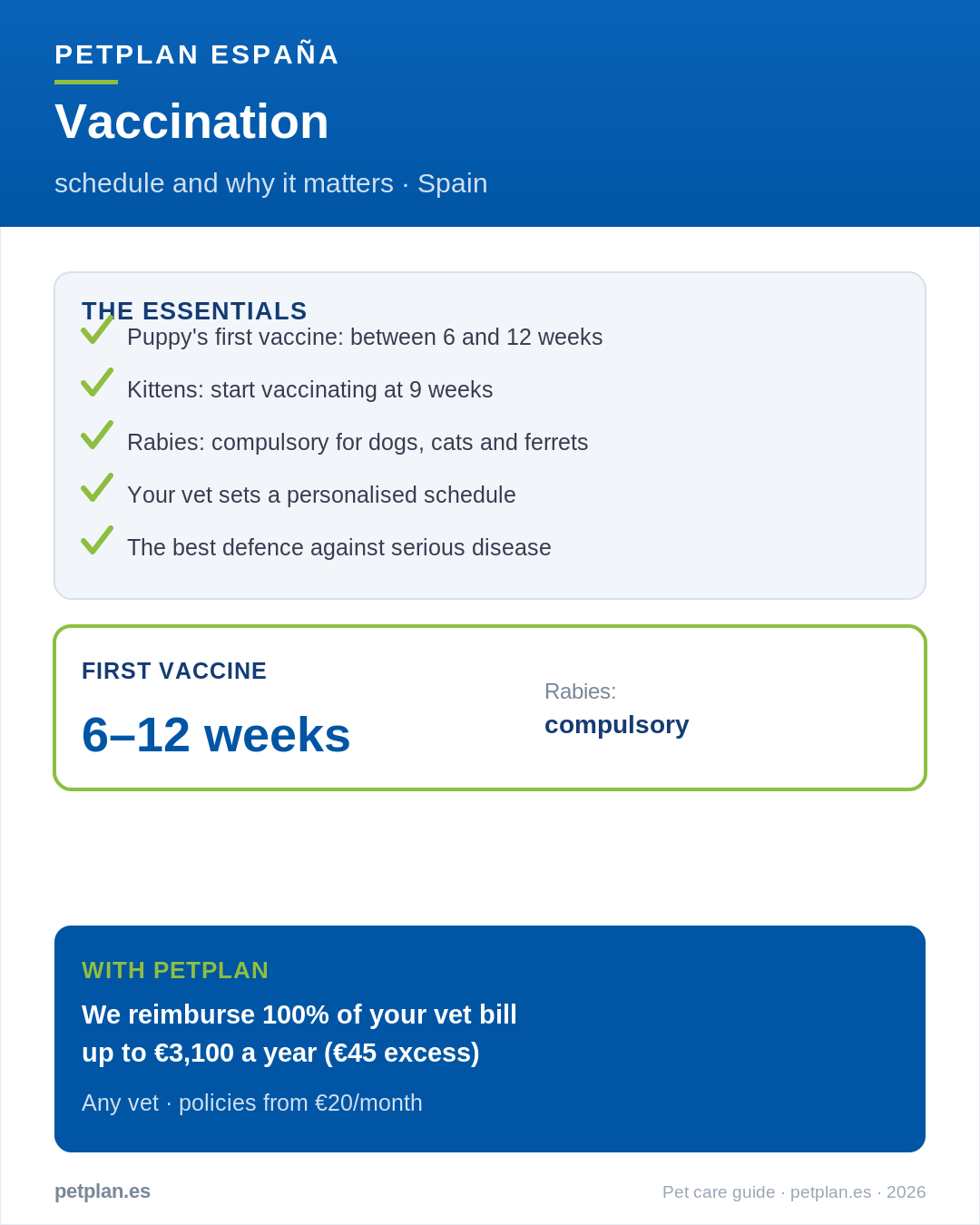
A puppy’s first vaccine is given between 6 and 12 weeks of age, and kittens start at around 9 weeks. The rabies vaccine is compulsory in Spain for dogs, cats and ferrets, and must be boosted every year. Only an authorised vet can vaccinate, and it is your vet who sets the personalised schedule for your pet.
Key facts:
- Puppy’s first vaccine: between 6 and 12 weeks of age.
- Kittens: start vaccinating at around 9 weeks.
- Rabies: compulsory for dogs, cats and ferrets; boosted annually.
- Who vaccinates: only an authorised veterinary surgeon.
- The schedule is personalised: it depends on species, age, lifestyle and where you live.
Vaccination is the single most effective thing you can do to protect a pet from serious, often fatal, infectious disease. It is also, in the case of rabies, a legal obligation.
Why vaccinate?
Vaccines train the immune system to recognise and fight a disease before the animal ever meets it. Several of the illnesses they protect against — distemper, parvovirus, feline leukaemia, rabies — are severe, expensive to treat and frequently fatal, particularly in young animals whose immune systems are still developing. Vaccinating is far cheaper, and infinitely kinder, than treating.
When should a puppy be vaccinated?
The first vaccine is given between 6 and 12 weeks of age. Puppies receive antibodies from their mother’s milk, and those maternal antibodies gradually fade; the vaccination schedule is designed to take over exactly as that protection wanes. That is why the first shot is followed by boosters a few weeks apart, rather than being a single event.
And kittens?
Kittens usually start at around 9 weeks, again followed by boosters. As with puppies, the aim is to build immunity as maternal protection fades. Indoor cats still need vaccinating: viruses travel on shoes, clothes and other animals.
Is the rabies vaccine compulsory in Spain?
Yes. The rabies vaccine is compulsory for dogs, cats and ferrets, and requires an annual booster. It must be administered by an authorised vet and recorded in the animal’s documentation. It is also the vaccine that underpins the European pet passport: without it up to date, you cannot travel with your pet within the EU.
Who can vaccinate my pet?
Only an authorised veterinary surgeon. Beyond the legal requirement, there is a good practical reason: before vaccinating, the vet examines the animal to make sure it is healthy enough to receive the vaccine, and records everything properly. A vaccine given badly, or to a sick animal, does not protect.
What schedule does my pet need?
There is no single answer, and that is the point. The schedule depends on the species, the age, the lifestyle (indoor or outdoor, contact with other animals, boarding kennels, travel) and where you live. Your vet will draw up a personalised plan and tell you when each booster is due. Keep the record safe — you will need it for travel, boarding and, in the case of rabies, for the law.
Frequently asked questions
When does a puppy get its first vaccine?
Between 6 and 12 weeks of age, followed by boosters a few weeks apart.
Is the rabies vaccine compulsory in Spain?
Yes, for dogs, cats and ferrets, with an annual booster given by an authorised vet.
Do indoor cats need vaccinating?
Yes. Viruses can be carried indoors on shoes, clothing and other animals.
Who can give the vaccine?
Only an authorised veterinary surgeon, who will also check your pet is fit to be vaccinated.
Vaccines prevent; they do not cover the accidents and illnesses that come anyway. Petplan España (Petplan Ibérica, S.L.) reimburses 100% of the vet bill up to €3,100 a year, with a €45 excess, at any vet you choose. See the policy terms.
