

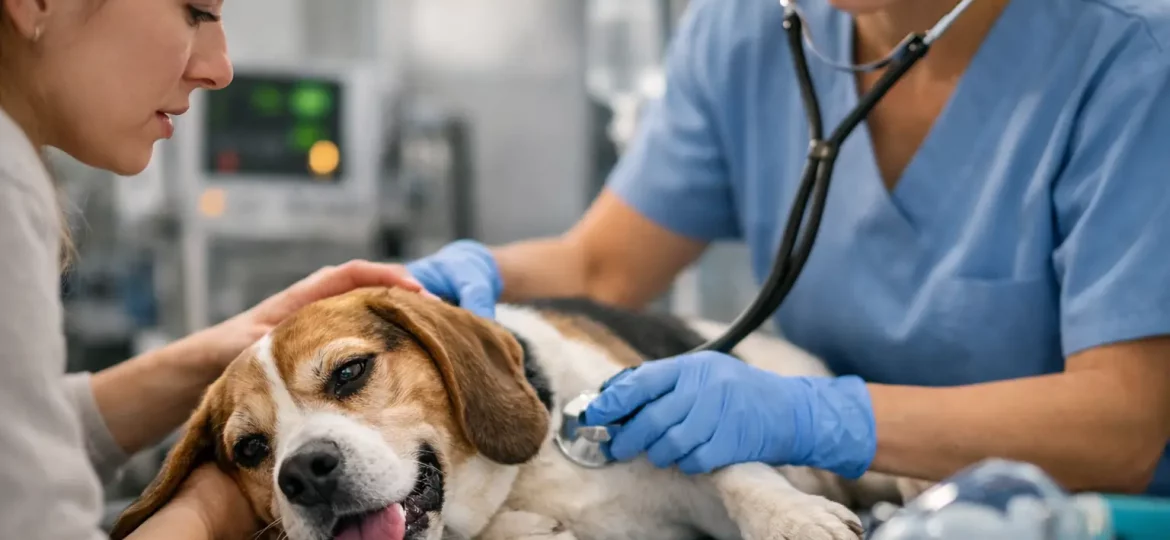
Strange breathing at midnight, vomiting with blood, or a fall from a window do not allow the same margin for waiting as a mild limp. Recognising these 7 signs of a veterinary emergency lets you make a quick, calm decision at moments when every minute can make a difference to your dog, cat or rabbit.
Not every discomfort means heading straight to a clinic, but where there is reasonable doubt it is worth calling a veterinary service. Describing what you can see, how long it has been happening and whether your pet may have swallowed something dangerous helps the professional guide your first steps. Never delay the consultation simply because the animal seems to improve for a few minutes.
7 signs of a veterinary emergency that need action
1. Difficulty breathing or abnormal breathing
Laboured breathing, open-mouth breathing without exercise, wheezing, loud noises, or gums that look blue, grey or very pale is an emergency. So is very rapid breathing while at rest, especially if the animal is restless, cannot settle down or stretches out their neck to take in air.
In cats, open-mouth breathing is particularly worrying. In rabbits, who tend to hide discomfort, any breathing difficulty should be assessed without delay. Keep your pet calm, avoid handling them more than necessary, and do not force food, water or medication on them before you have veterinary instructions.
2. Loss of consciousness, seizures or severe disorientation
Fainting, a seizure or sudden weakness can be linked to neurological problems, poisoning, metabolic disorders, heatstroke or other serious situations. During a seizure, move away objects they could hit, and lower the light and noise around them. Do not try to open their mouth or hold their tongue: they could bite you involuntarily, and there is no risk of them swallowing it.
If you can do so without delaying your departure, note how long the episode lasts or record a short video to show the vet. After a seizure, some animals remain confused, wander aimlessly or seem not to recognise you. Even if they recover, they need urgent assessment, especially if it is the first episode or if it recurs.
3. Heavy bleeding or deep wounds
Bleeding that will not stop, a deep wound, a serious bite or trauma after being hit by a vehicle all require immediate attention. Apply gentle, continuous pressure with gauze or a clean cloth over the area, as long as the animal will tolerate it. Do not use alcohol, hydrogen peroxide or irritant products inside a wound, and do not remove embedded objects: they may be holding back a heavier bleed.
An impact can also cause internal injuries that are not visible. So even if your pet gets up or walks after a fall, a fight or an accident, it is advisable to contact a clinic. Pain, rapid breathing, a swollen abdomen, weakness or pale gums all increase the urgency.
4. Very swollen abdomen, severe pain, or retching without vomiting
A hard or enlarged abdomen, along with restlessness, drooling, pain or repeated attempts to vomit without bringing anything up, calls for an immediate consultation. In dogs, and especially in some deep-chested breeds, these signs can be consistent with gastric dilatation, an emergency that needs rapid treatment.
Acute pain is not always expressed with whimpering. A cat may hide, adopt a hunched posture or react to touch. A rabbit may stop moving, grind their teeth or stop eating. Do not give human painkillers: medicines that are routine for people can be highly toxic to animals, even in small doses.
5. Inability to urinate, or persistent vomiting and diarrhoea
Repeated straining to urinate, passing only a few drops, crying in the litter tray, or producing no urine at all is a sign that cannot wait. In male cats, a urinary blockage can progress quickly and become life-threatening. An absence of stools on its own is not always an emergency, but combined with pain, vomiting, lethargy or a distended abdomen it needs assessment.
An isolated bout of vomiting in an animal who is then normal may have minor causes. Repeated vomiting, heavy diarrhoea, the presence of blood, total refusal of water or signs of dehydration change the picture entirely. Puppies, older animals and rabbits can deteriorate more quickly, so it is better to seek advice early.
6. Suspected poisoning or swallowing a foreign object
Chocolate, grapes and raisins, medicines, cleaning products, insecticides, plants, rodent bait and antifreeze are examples of substances that can be dangerous. So are certain objects: bones, broken toys, string, needles, batteries or fabric can cause blockages or internal injuries.
If you suspect something has been swallowed, keep the packaging, a photo of the label or a sample of anything they have vomited, if possible. That information helps identify the compound and act more precisely. Do not induce vomiting yourself, and do not offer milk, oil, salt or home remedies. Depending on the substance, those measures can make the problem worse or delay the right treatment.
7. Heatstroke, hypothermia or a severe allergic reaction
Heavy panting, weakness, staggering, vomiting, very red gums or altered consciousness after exposure to heat can all indicate heatstroke. It is an emergency even if the animal suddenly stops panting. Move them somewhere cool, dampen the body with water at room temperature (not ice-cold) and contact a vet immediately while you travel.
Sudden swelling of the face, muzzle or eyelids also needs a fast response, especially if accompanied by breathing difficulty, vomiting or collapse. After a sting, an allergic reaction can progress quickly. In cases of hypothermia, dry and gently wrap the animal, without applying direct heat sources to the skin.
What to do before you reach the clinic
Staying calm helps, but it does not mean playing down the symptoms. Call before you leave if you can: the clinic can prepare to receive your pet and tell you how to transport them. Give the species, approximate age, symptoms, time of onset, possible toxins or trauma, and any illness or medication you know about.
For the journey, use a carrier for cats and rabbits wherever possible. For dogs in pain or with reduced mobility, a blanket can serve as an improvised stretcher between two people. Handle them carefully: even a very trusting animal can react out of fear or pain. Keep the car ventilated, reduce noise and avoid offering food or water unless the vet recommends it.
Take the vaccination card, recent reports and details of any medication they are on. If you have pet insurance, having the policy documents to hand can help you focus on what matters: getting care without adding financial uncertainty at a difficult moment. With 24/7 veterinary assistance services, such as those Petplan offers, you can also resolve initial questions and judge more clearly when an emergency visit is necessary.
The 7 emergency signs on video
The seven signs you should never ignore in your dog or cat, explained on video.
The video is narrated in Spanish. You will find more videos on pet health and insurance on our YouTube channel.
When it looks like an emergency, it is better to check
The signs do not always appear clearly, and every animal expresses pain differently. A sudden change in behaviour, a rabbit that stops eating, hiding for no apparent reason or a dull look in the eyes can all be the first clues to a serious problem. Waiting to see whether things improve can be reasonable with mild, passing discomfort, but not with breathing difficulty, severe pain, altered consciousness, bleeding, poisoning or trouble urinating.
Knowing your pet remains one of the best preventive tools you have. If something does not fit their usual way of breathing, moving, eating or interacting, ask for veterinary guidance. Acting in time is not overreacting: it is protecting someone who depends on you.
